Best Landscaping Trees for Niagara Gardens: Top Picks for Shade, Privacy and Seasonal Colour
Choosing the right landscaping trees is one of the most important investments you can make in your outdoor space. In the Niagara region, we are fortunate to enjoy a relatively mild climate - generally falling into zones 6a to 7b - but successful gardening here requires more than just picking a pretty plant.
To ensure your tree thrives, you must consider local soil conditions, available sunlight, and the ultimate mature size of the tree. Planting the wrong tree in the wrong place can lead to structural issues, excessive maintenance, or a garden that feels overcrowded.
By matching your tree to your specific microclimate, you’ll create a sustainable, beautiful outdoor space that grows with you for years to come.
Selecting the right landscaping trees is a lifelong decision, and you don't have to do it alone. Visit Gauld Nurseries today!
Key Takeaways
Plan for Maturity: Always research the full size of a tree before purchasing to avoid future maintenance headaches.
Native is Better: Native species like the Red Oak or Serviceberry are already adapted to our climate and support local pollinators.
Layer Your Garden: Use a mix of tall shade trees, medium-sized ornamentals, and low-growing shrubs to create visual depth.
Consult the Pros: If you are unsure about your soil type or the best spot for your new tree, visit a local expert.
1. Why Strategic Planting Matters
In Niagara, your garden is part of a unique ecosystem, influenced by the Niagara Escarpment and the moderating effects of our Great Lakes. Before you dig, consider these three factors:
Climate & Microclimates
While Niagara is generally mild, winds off the lakes or heat-reflective pavement near your home can create microclimates. Observe how snow melts or where the sun hits in your yard to choose the right spot.
Space & Scale
It is easy to fall in love with a sapling, but always check its mature height and spread. A tree that looks perfect in a 5-gallon pot might eventually dominate your entire property. Always consider the impact on your home’s infrastructure before planting.
Soil Health
Understanding your drainage (clay-heavy versus sandy) helps you avoid waterlogged roots or drought-stressed trees. Always conduct a simple drainage test before choosing your species.
2. Top Picks by Use-Case
Shade Trees
Ideal for providing a cooling canopy for your patio or lowering cooling costs during hot Niagara summers.
Red Oak (Quercus rubra): A sturdy, long-lived native. Provides excellent shade and spectacular fall colour. Best for large yards.
Sunburst Honey Locust: A popular, thornless selection that offers a dappled, filtered shade. This allows grass and sun-loving perennials to thrive underneath its canopy, making it a versatile choice for modern landscapes.
Privacy Trees
Perfect for creating a natural, living fence to block unwanted views or reduce noise from traffic.
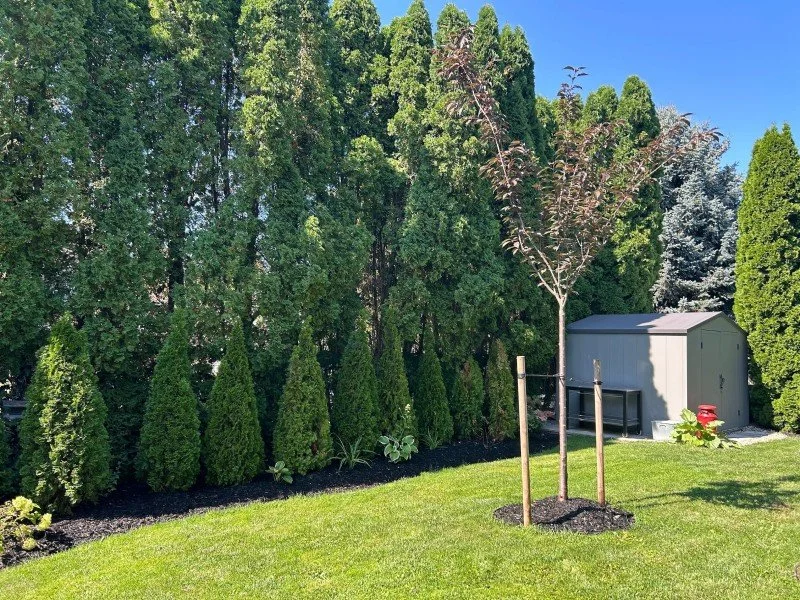
Emerald Cedar (Thuja occidentalis): The gold standard for hedges in Ontario. These are dense, narrow, and stay vibrant green year-round. They require minimal maintenance once established.
Columnar Norway Spruce: A fantastic, slender choice if you need a sturdy windbreak or year-round privacy screen but have limited lateral space in your yard.
Ornamental/Colour Trees
These smaller trees add character, seasonal interest, and curb appeal without overwhelming your garden beds.
Eastern Redbud: Famous for its stunning pink-purple spring flowers that emerge on bare branches before the leaves. It serves as a perfect focal point for front-yard gardens.
Serviceberry (Amelanchier): A true multi-season star with delicate white spring blossoms, summer berries that attract local birds, and fiery autumn foliage.
Japanese Maple: A staple for any garden enthusiast. These offer elegant, delicate textures and vibrant red, orange, or deep burgundy foliage. They are perfect for shaded corners or sheltered garden beds.
| Tree Type | Mature Size (Approx.) | Growth Rate | Best Use |
|---|---|---|---|
| Red Oak | 50–70 ft | Moderate | Large shade canopy |
| Emerald Cedar | 12–15 ft | Moderate | Privacy screening |
| Serviceberry | 15–25 ft | Slow/Moderate | Ornamental accent |
3. Planting Tips for Niagara Success
Mind the Infrastructure: Never plant large trees within 3 meters (10 ft) of overhead power lines. Before you start your project, you must contact Ontario One to locate any underground utilities.
Foundation Clearance: Keep large trees at least 3 to 5 meters away from building foundations to prevent root intrusion and moisture issues near your basement.
The "Cool Roots" Rule: Apply a 2–3 inch layer of organic mulch around the base of your tree. Keep the mulch away from the trunk itself to prevent rot, but use it to keep the root zone cool and retain moisture during our humid summers.
Proper Watering: Even "hardy" trees need deep, consistent watering during their first two years to establish a healthy root system. Avoid light, frequent sprinkling; instead, give them a slow, deep soak once or twice a week.

Ready to grow your perfect garden?
Located on the beautiful Niagara Escarpment, we offer a vast selection of healthy, locally-adapted trees.
Whether you need help selecting the right species for your soil or want expert advice on planting, our team is ready to help you turn your landscape into the Niagara garden you’ve always envisioned.
Have a question about a specific tree or want to see our latest arrivals?
Drop by at 8865 Mountain Road in Niagara Falls, ON or give us a call!
“Needed an evergreen. Staff was fantastic. Got me the right tree and very reasonable price.
”