Landscaping and Trees in Niagara: How to Design Around the Right Tree from the Start
Carefully planning your landscaping and trees from the start ensures your outdoor space grows into a beautiful, functional sanctuary that enhances your property's value for decades.
Imagine stepping into your yard ten years from now. The sun is shining, but you are sitting comfortably in the cool shade of a magnificent, healthy tree. Its roots have plenty of room to grow, its branches perfectly frame your home without crowding the roof, and the surrounding garden beds are bursting with life.
This ideal picture is only possible when you design your landscape with the right tree in mind from the very beginning.Here is how you can thoughtfully plan, select, and design your landscape around the perfect tree.
At Gauld Nurseries, we have been helping Niagara homeowners bring their outdoor spaces to life for decades. Contact us today for local expertise on landscaping and trees.
Key Takeaways
The Anchor Principle: A tree is a permanent, living anchor. Designing your yard around its mature size—rather than its size at planting—saves thousands of dollars in future damage and removal costs.
Niagara’s Unique Conditions: Our local microclimates (influenced by the Great Lakes and the Escarpment) and clay soils require specific, hardy tree selections to ensure long-term health.
Layering is Crucial: Successful landscaping around a tree involves thoughtful layering, combining understory shrubs and shade-tolerant perennials that won't compete with the tree's root system.
1. Start with a Plan: The Core Considerations
In the Niagara region, where our unique microclimates and clay-dominant soils present both distinct opportunities and challenges, choosing a tree is one of the most important decisions in any landscaping project.
It is more than just a decorative addition; a tree is a living anchor that establishes the structure, privacy, and long-term value of your entire property.
Before falling in love with a tree at the nursery, you need to analyze its future home. Proper pre-planting planning prevents property damage and ensures your tree survives past its critical first few years.
Mature Size: A tiny sapling in a pot can easily grow into a forty-foot giant. Research the ultimate height and canopy spread to ensure it won’t interfere with power lines or block valuable sunlight.
Sun Exposure: Determine how many hours of direct sunlight the area receives. A shade-loving species will scorch in full, south-facing sun, while sun-loving varieties will become leggy and weak in deep shade.
Soil & Drainage: Much of Niagara features heavy, slow-draining clay. You must choose trees that tolerate "wet feet" or amend your soil properly to promote healthy root respiration (how roots breathe).
Proximity to Structures & Utilities: Always look up and down. Avoid planting close to foundations, septic systems, walkways, and overhead power lines.


2. Best Trees for Niagara Landscapes
The Niagara Peninsula sits in a unique agricultural zone. This allows us to grow a gorgeous variety of native and hardy ornamental trees.
Here are some top recommendations for Niagara properties:
Top Tree Recommendations for Niagara Properties
| Tree Category | Recommended Varieties | Key Features & Why They Work |
|---|---|---|
| Flowering & Ornamental | Serviceberry (Amelanchier) | A stunning native option with spring blooms, edible summer berries, and brilliant red autumn foliage. Highly adaptable to various soils. |
| Shade Trees | Red Oak (Quercus rubra) | Fast-growing for an oak, incredibly sturdy, and provides a wide, leafy canopy that cools your home in summer. Excellent for local clay. |
| Privacy & Evergreen | Eastern White Cedar | A native classic. Perfect for dense, natural windbreaks and privacy screens that stay green all winter long. |
| Unique Focal Points | Paperbark Maple | Ideal for smaller yards, offering striking, peeling copper bark that provides visual interest throughout the winter. |
3. Design Around the Tree: Creating Harmony
Once you have selected your anchor tree, you can design the rest of your landscape to complement it. A tree shouldn't sit isolated in a sea of grass; it should be integrated seamlessly into your overall garden design.
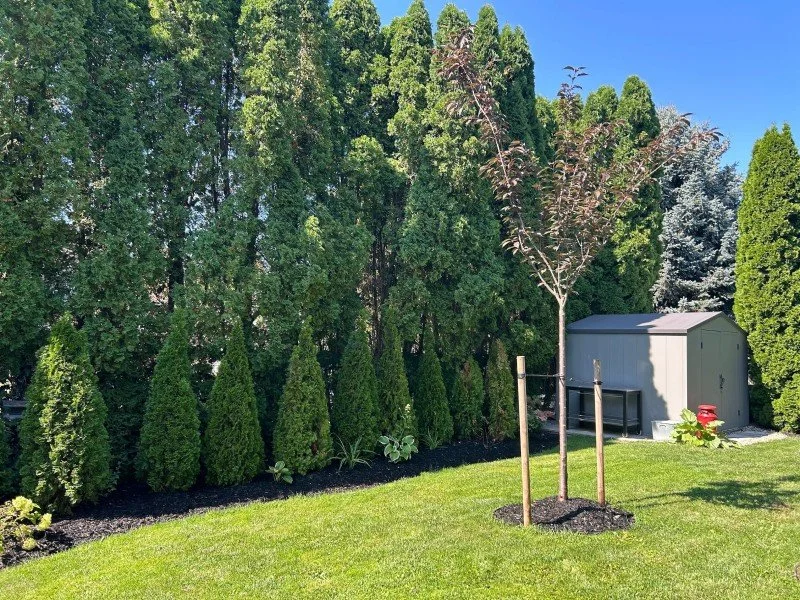
Garden Beds and Layering
Avoid planting grass right up to the trunk. Grass competes heavily with tree roots for water and nutrients. Instead, establish a wide, organic garden bed around the base. Use the concept of layering:
The Canopy: Your main anchor tree.
Understory Shrubs: Plant shade-tolerant shrubs like Oakleaf Hydrangeas or Yews just outside the main drip line (the outer edge of the canopy).
Groundcover & Perennials: Use shallow-rooted, shade-loving perennials like Hostas, Coral Bells (Heuchera), and Astilbe closer to the trunk.
Pro Tip: Never pile mulch high against the trunk (avoid the "mulch volcano"). Keep mulch a few inches away from the bark to prevent moisture build-up, rot, and insect damage.
Walkways, Patios, and Hardscaping
If you are planning a patio or walkway near a tree, use permeable materials like interlocking pavers or gravel. These materials allow water and air to reach the tree's roots, preventing root suffocation and reducing the likelihood of roots lifting your stonework.
4. Avoid Common Mistakes: Learn Before You Dig
It is much easier to plant the right tree in the right spot than to deal with the consequences of poor planning down the road. Keep these common mistakes in mind:
Planting Too Close to Foundations: Aggressive root systems can pressure basement walls or find their way into old sewer pipes. Plant large shade trees at least fifteen to twenty feet away from your home.
Ignoring the "Drip Line": The area directly under the outer canopy is where the tree absorbs most of its water. Digging deep trenches or changing soil grades inside this zone can severely damage the root system.
Choosing Fast-Growing but Weak Trees: Varieties like Manitoba Maples or certain Willows grow quickly but have weak wood, making them highly susceptible to breaking during heavy Niagara winter storms.
5. Frequently Asked Questions (FAQs)
Q: When is the best time of year to plant a new tree in Niagara?
A: Spring (mid-April to June) and autumn (September to November) are the ideal planting windows. During these cooler seasons, the soil is moist and the tree can focus its energy on establishing roots rather than battling summer heat.
Q: How often do I need to water a newly planted tree?
A: For the first two growing seasons, deep and infrequent watering is key. Instead of a daily splash, give your tree a slow, deep soak (equivalent to about 2-3 buckets of water) twice a week, adjusting for rainfall.
Q: Can you help me choose a tree that won't attract pests?
A: Absolutely. By selecting native species and hardy, disease-resistant cultivars, we can significantly reduce the risk of pests. Our team can recommend the perfect varieties during your visit.
Ready to Transform Your Landscape?
Whether you are looking to plant a single showcase tree or planning a complete backyard overhaul, the experts at Gauld Nurseries are here to help.
Browse Our Collection: Visit our deciduous, evergreen, and fruit trees pages to explore varieties that thrive in our local climate.
Consult Our Experts: Book a Professional Landscape Consultation with our design team today, and let’s build a beautiful, sustainable outdoor space together.
Have a question about a specific tree or want to see our latest arrivals? Drop by at 8865 Mountain Road in Niagara Falls, ON or give us a call!
“We bought a large 22’ Armstrong Red Maple from Gauld and it was an amazing experience. The woman who helped us select our tree spent ages walking us through their property, discussing the various species options to suit our yard and made sure once we selected our tree that it was immediately marked. Then the three guys who delivered and planted our tree were equally amazing. They ensured that the tree was planted to the exact depth needed, checked the width the sod was cut out, staked and mulched. They were all extremely polite and answered all our questions about post planting care and left our property exactly as they found it, even sweeping debris off our gravel drive. PS. We loved the staff crazy shirt Fridays.”